


-
Products
 ProductsExperience the best selection at Baliya. Our leather bags and goods exude quality and charm. Inquire now for exclusive deals and custom quotes!
For bag designers aiming to balance durability, style, and market appeal, mastering the nuances of cowhide vs split leather is essential—both are core types of genuine leather, but their unique properties shape everything from product lifespan to design versatility.
Before diving into cowhide vs split leather, it’s critical to ground your understanding in their origins and place within types of genuine leather.
Cowhide refers to full-grain or top-grain leather sourced from cow hides, retaining the hide’s natural strength and grain. Split leather is the lower layer of cowhide (separated from the top grain during processing), with a fibrous, less structured surface.
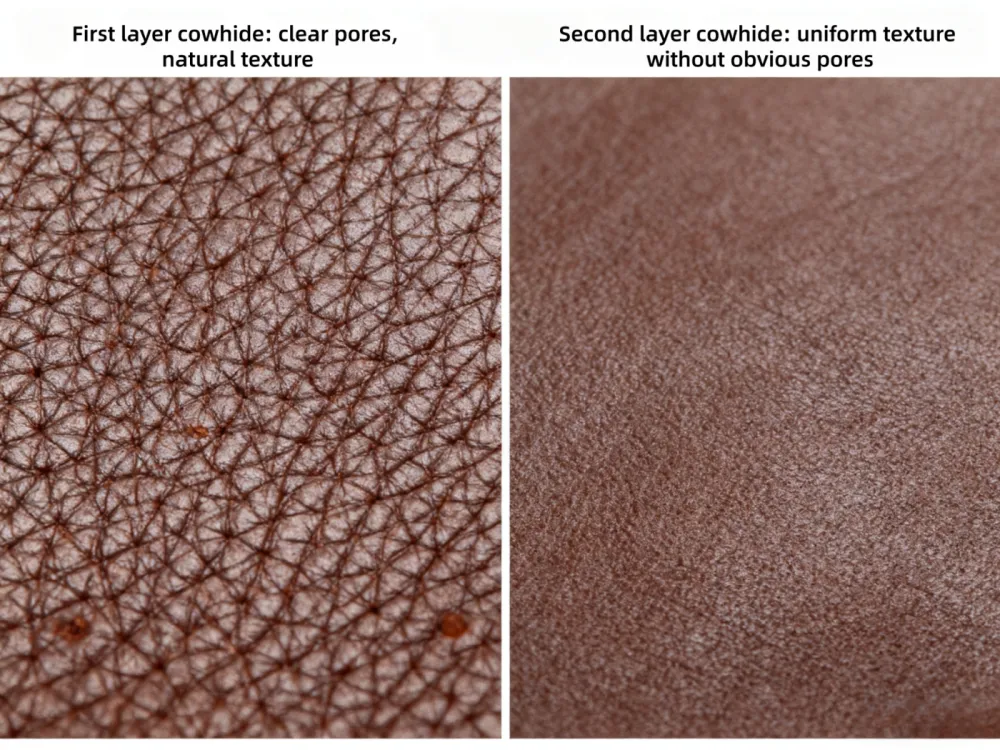
Both fall under types of genuine leather, but their differences in durability, texture, and cost directly impact a bag’s performance—whether it’s a daily-use tote or a statement cowhide crossbody bag.
Cowhide is a staple in premium bag design, prized for its blend of strength and style that shines in pieces like the cowhide crossbody bag.
Cowhide is crafted from the top layer of cow hides, minimally processed to preserve natural grain (full-grain) or lightly buffed (top-grain). This retains the hide’s inherent toughness and organic texture.
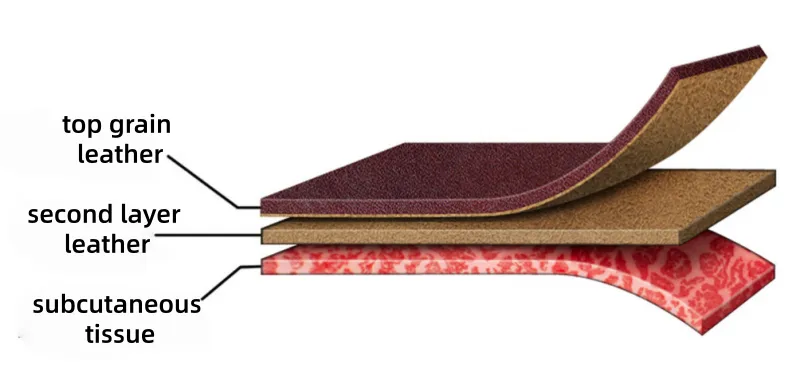
Cowhide offers rich, varied grain patterns, develops a desirable patina over time, and boasts exceptional tear and wear resistance. These traits make it ideal for durable yet stylish pieces, including the cowhide crossbody bag, work satchels, and travel bags.
2.3 Design Applications of Cowhide Leather
Beyond the cowhide crossbody bag, it excels in structured handbags, leather backpacks, and luxury tote bags—any design where longevity and premium feel are non-negotiable.
Split leather, a more accessible member of types of genuine leather, caters to budget-friendly and specific functional needs.
Split leather is created by splitting cowhide into two layers: the top (used for cowhide) and the lower split. It’s often coated or embossed to enhance durability and appearance, as its natural surface is porous and less smooth.
Split leather is lighter and more affordable than cowhide but less durable—prone to stretching or tearing with heavy use. It works best for low-to-medium wear bags, not heavy-duty designs.
It’s ideal for casual tote bags, promotional bags, or interior linings of premium bags. Its flexibility also suits soft-structured designs where cost efficiency is key.
Comparing cowhide vs split leather across critical design factors helps you make intentional choices for your collection.
Cowhide is significantly more durable, lasting years (even decades) with proper care. Split leather has a shorter lifespan, typically 1–3 years with regular use.
Cowhide features natural grain patterns (pores, subtle markings) for a premium, organic look. Split leather has a uniform, often coated surface—less distinct but consistent for sleek, minimalist designs.
Cowhide requires minimal care (occasional conditioning) to preserve its quality. Split leather needs gentle cleaning and avoid moisture, as its porous structure absorbs liquids easily.
Cowhide is more expensive due to its premium quality and limited yield. Split leather is budget-friendly, making it ideal for high-volume or mid-range collections.
Aligning cowhide vs split leather with your design goals, audience, and product purpose ensures you deliver value.
Opt for cowhide for high-wear pieces like the cowhide crossbody bag, work bags, or luxury designs. Choose split leather for casual, occasional-use bags or cost-sensitive lines.
If your brand emphasizes natural luxury, cowhide’s grain and patina are worth the investment. For modern, uniform designs or entry-level pricing, split leather (embossed or coated) delivers style at a lower cost.

Mix cowhide (for hero pieces like the cowhide crossbody bag) and split leather (for complementary styles) to diversify your collection while covering different price points and use cases.