


-
Products
 ProductsExperience the best selection at Baliya. Our leather bags and goods exude quality and charm. Inquire now for exclusive deals and custom quotes!
When it comes to distinguishing a premium leather bag from a mediocre one, many people focus on leather texture or brand logos. However, leather bag stitching is the unsung hero that truly reflects craftsmanship. Well - executed leather bag stitching not only ensures durability but also elevates the overall aesthetic, making every detail of the bag exude luxury. In this post, we’ll break down the key elements of leather bag stitching that define high quality, helping you make smarter choices when investing in a leather accessory.
The most obvious sign of stitching on a premium leather bag is uniformity. Every stitch should be of the same length and have the same spacing, with no uneven gaps or overlapping threads. For high - end leather bags, the stitch density is usually between 8 and 12 stitches per inch. This density strikes the perfect balance between strength and aesthetics. Too few stitches will compromise the bag’s durability, while too many can puncture the leather excessively, weakening its structure.
When examining leather bag stitching, run your finger along the seam. A smooth, consistent feel indicates careful craftsmanship, while uneven stitches often signal mass - produced, low - quality work.
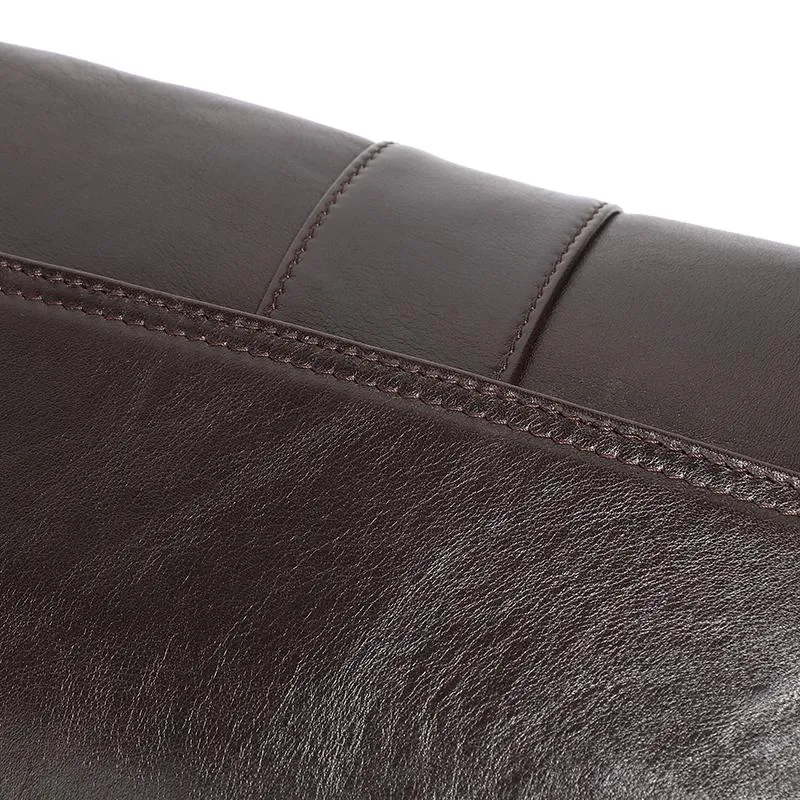
Premium leather bag stitching relies on high - grade threads that match the leather’s durability. Top brands typically use waxed cotton or polyester threads, which are resistant to abrasion, moisture, and fading. Waxed threads also have better tension retention, ensuring that the stitches don't loosen over time.
Another detail not to overlook is color coordination: the thread color should either perfectly match the leather or create a subtle contrast that enhances the bag’s design. Poorly matched threads or low - quality, fraying threads will immediately downgrade the look of even the finest leather, making leather bag stitching a critical factor in the bag’s overall premium feel.
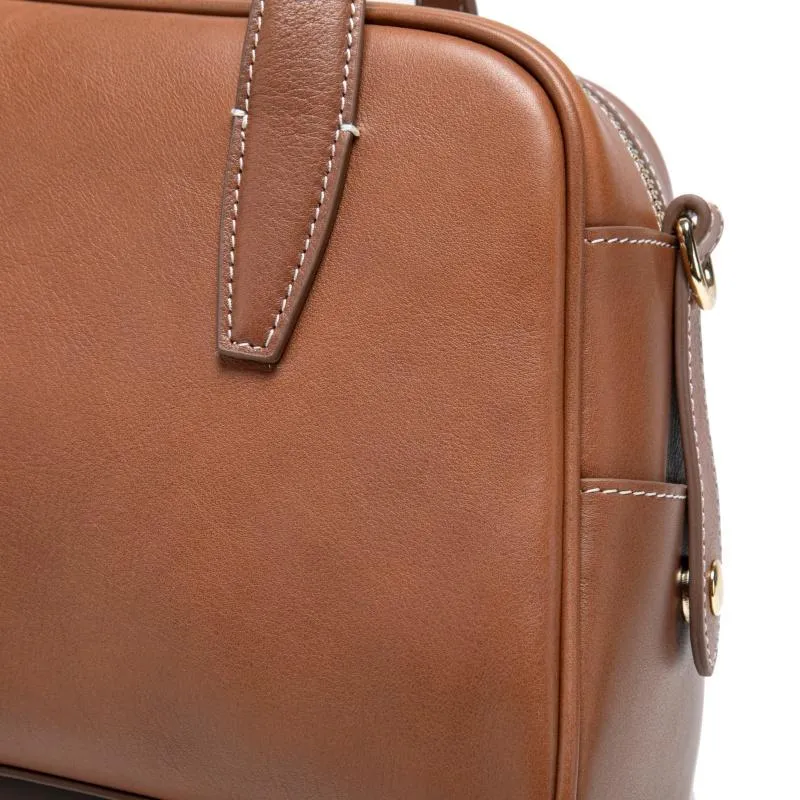
Luxury leather bags often utilize flat-felled seams or lock stitches for their leather bag stitching—two techniques that prioritize strength and neatness. A flat-felled seam entails folding the edges of the leather inward and stitching them down, creating a smooth, substantial seam that is resistant to fraying. Lock stitches, conversely, employ two threads (one from the top and one from the bottom) that interlock at each stitch, ensuring the seam won't unravel even if one thread breaks. These stitching methods demand more time and skill than basic straight stitches, which is why they are a hallmark of premium craftsmanship. When examining a leather bag, inspect the inner seams: clean, well-finished stitching here is a definite sign of quality.
Corners and edges are the most challenging areas for leather bag stitching, and they're where craftsmanship shines the brightest. High - end bags feature tight, crisp stitching at corners—no loose threads, no uneven turns. The stitching should precisely follow the curve or angle of the corner, with no gaps or bunching of leather.
Additionally, premium leather bag stitching is often paired with exquisite leather bag edge finishing: the edges of the leather are smoothed, painted, or burnished to prevent fraying, creating a seamless transition between the stitch and the leather edge. This combination of precise stitching and edge finishing not only enhances durability but also adds a polished, luxurious touch that cheap bags can't replicate.
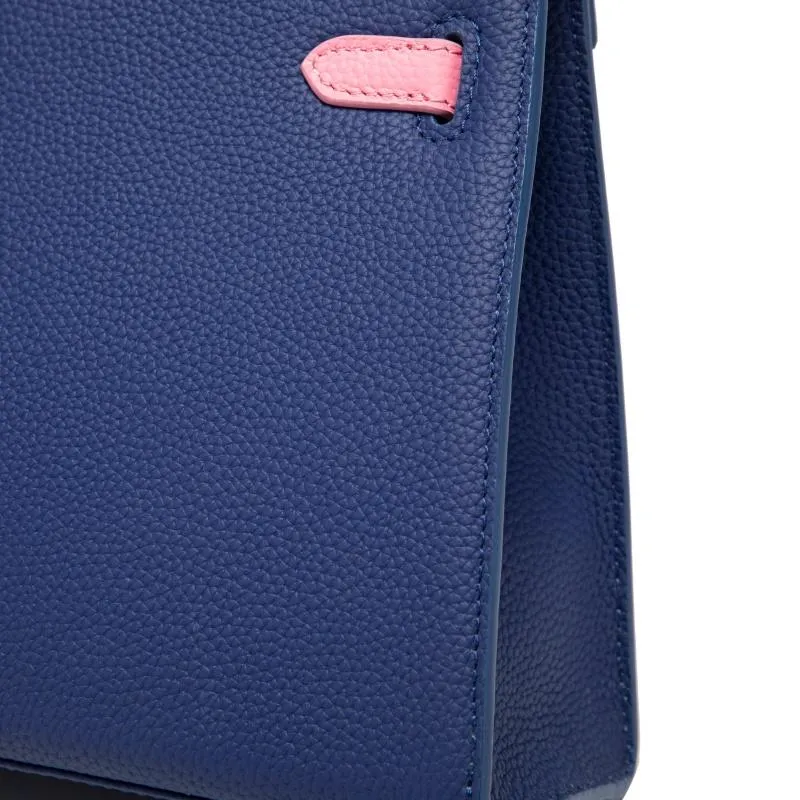
Leather bag stitching doesn't exist in isolation; it's closely linked to other key processes, such as the leather tanning process. High - quality tanned leather is more supple and has a consistent thickness, which makes it easier to achieve uniform stitching. Poorly tanned leather, however, may have uneven thickness or stiffness, resulting in messy and uneven stitches. This is why top brands invest significantly in both premium tanning and skilled stitching. The two processes work in tandem to create a bag that is both durable and aesthetically pleasing.
When evaluating a leather bag, keep in mind that exceptional leather bag stitching reflects the brand's commitment to quality throughout all aspects of production.
In conclusion, leather bag stitching is far more than just a functional detail; it is the backbone of a premium leather bag. From uniform stitch density to high - quality threads, from precise corner stitching to seamless edge finishing, every aspect of the stitching process contributes to the bag's overall quality and luxuriousness.
Next time you're shopping for a leather bag, take a moment to closely examine the stitching. You'll be surprised at how much it reveals about the bag's craftsmanship. Invest in a bag with exceptional leather bag stitching, and you'll own a timeless accessory that will last for years to come.