


-
Products
 ProductsExperience the best selection at Baliya. Our leather bags and goods exude quality and charm. Inquire now for exclusive deals and custom quotes!
In today’s competitive leather goods market, branding has evolved beyond simple logos. Customers increasingly associate subtle detailing and craftsmanship with premium value. As a result, brands are moving away from oversized or overly decorative marks and focusing instead on refined, durable branding solutions. Laser engraving on leather has emerged as a powerful method for achieving this balance between visibility and sophistication.
Modern consumers expect branding to feel intentional and integrated rather than applied as an afterthought. Laser engraving on leather allows logos and brand marks to become part of the material itself, reinforcing authenticity and enhancing perceived quality.
Buyers today are more informed and detail-oriented. They evaluate leather goods not only by appearance but also by construction, material choice, and finishing techniques. This shift has increased demand for branding methods that align with craftsmanship values. Laser engraving on leather meets these expectations by offering precision without compromising the natural character of the leather.
Laser engraving on leather is a non-contact process that uses a focused laser beam to mark the leather surface through controlled heat. Instead of pressing or adding materials, the laser precisely alters the top layer of the leather to create a permanent design. This method ensures clean edges, consistent depth, and excellent repeatability.
Because the process is digitally controlled, laser engraving on leather delivers highly accurate results. Fine text, detailed logos, and complex patterns can be reproduced exactly across different production runs, making it ideal for brand consistency.
Not all leathers respond the same way to laser treatment. Full-grain, top-grain, and vegetable-tanned leathers typically produce the best results due to their natural surface and even fiber structure. These materials allow laser engraving on leather to achieve strong contrast and crisp detailing.
Heavily coated or corrected leathers may produce less predictable outcomes, which is why material testing is an essential step before full-scale production.
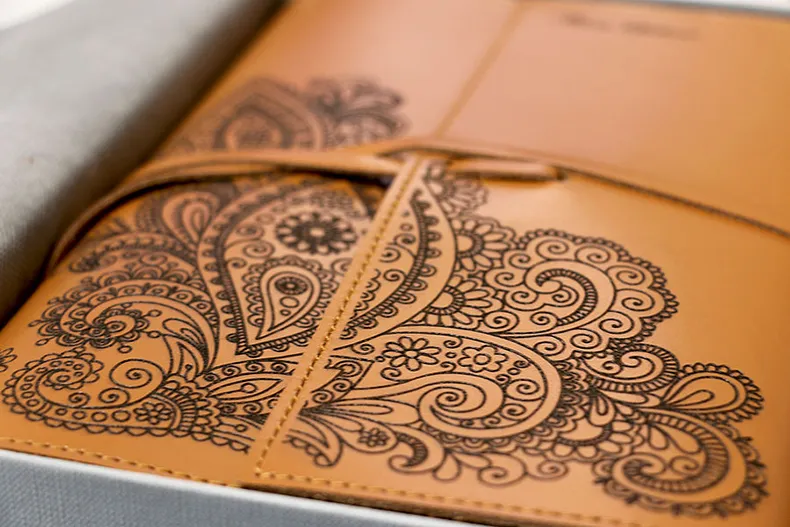
One of the primary reasons brands adopt laser engraving on leather is consistency. Once a digital design file is finalized, every logo can be engraved with the same size, placement, and depth. This eliminates variations caused by manual pressure or tooling wear.
For brands producing custom leather bags with logo requirements for retail, private label, or corporate projects, this consistency helps maintain a strong and recognizable identity.
Compared to embossing or foil stamping, laser engraving on leather creates a flatter, more minimalist effect. The logo becomes part of the leather surface rather than sitting on top of it, resulting in a modern and understated aesthetic.
This approach appeals particularly to brands targeting professionals, creatives, and consumers who prefer subtle luxury over bold decoration.
Laser engraving on leather offers designers greater creative freedom. Fine lines, intricate patterns, and small-scale typography can all be executed without the need for physical molds or plates. This flexibility allows brands to experiment with detailed artwork that would be difficult to achieve using traditional methods.
As a result, laser engraving on leather is often used for limited editions, collaborations, and personalized products where uniqueness adds value.
Another advantage of laser engraving on leather is its scalability. The same process works efficiently for small sample orders and large production volumes. Without tooling costs, brands can test new designs or offer customization options with minimal financial risk.
This scalability supports agile product development while maintaining consistent quality standards.
Durability is a key consideration when selecting a branding method. Laser engraving on leather alters the material itself, which means the logo will not peel, crack, or fade like printed designs. Instead, it ages naturally alongside the leather.
As the bag develops patina through regular use, laser engraving on leather often becomes more visually appealing, reinforcing the product’s authenticity and long-term value.
While branding plays an important role, overall durability depends on construction quality. Elements such as material selection, edge finishing, and leather bag stitching directly affect how well a bag performs over time.
When laser engraving on leather is combined with skilled craftsmanship, the final product communicates quality through both appearance and structure.
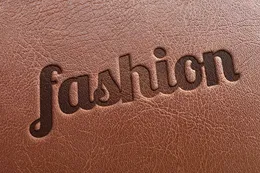
Laser engraving on leather is particularly suitable for brands that prioritize clean aesthetics, long-lasting logos, and professional presentation. It works well for business bags, lifestyle accessories, and minimalist designs where subtle branding enhances rather than dominates the product.
Brands seeking a timeless look often choose laser engraving on leather to avoid trend-driven finishes.
Despite its advantages, laser engraving on leather is not ideal for every application. Projects that require metallic finishes, high-contrast colors, or raised textures may benefit more from embossing or hot stamping.
Understanding these distinctions allows brands to select the most appropriate branding method based on product positioning and customer expectations.
Laser engraving on leather does not require inks, foils, or adhesives, making it a cleaner production option. The process generates minimal waste and reduces reliance on consumable materials commonly used in traditional logo techniques.
For brands focused on responsible manufacturing, laser engraving on leather aligns well with sustainability goals.
A logo that remains attractive over time contributes to stronger brand perception. Laser engraving on leather delivers a durable, timeless appearance that helps products stay relevant across seasons and markets.
This longevity supports customer trust and reinforces a brand’s commitment to quality.
Laser engraving on leather has become an essential branding solution for modern leather bag brands seeking precision, durability, and refined aesthetics. Its ability to deliver consistent results, support complex designs, and integrate seamlessly with high-quality materials makes it a valuable tool for brand differentiation.
When executed with the right leather and craftsmanship, laser engraving on leather transforms a logo into a lasting design element that communicates professionalism, authenticity, and long-term value.