


-
Products
 ProductsExperience the best selection at Baliya. Our leather bags and goods exude quality and charm. Inquire now for exclusive deals and custom quotes!
When you run your fingers over a well-crafted premium leather bag, the supple texture, rich patina, and distinct aroma all tell a story—one that begins long before the first stitch is sewn. At the heart of this story lies the leather tanning process, a transformative step that turns raw, perishable animal hide into durable, luxurious material worthy of high-end accessories. Many consumers marvel at the final product but rarely pause to consider the craftsmanship behind it, from how the leather is treated to how are leather bags made in their entirety. In this blog, we’ll demystify the tanning journey, shed light on why vegetable tanning is the gold standard for premium pieces, and touch on the meticulous details like leather bag edge finishing that elevate a good bag to a timeless one.
1. The Basics of Leather Tanning Process: Beyond Raw Hide
Before delving into why vegetable tanning reigns supreme, it’s essential to grasp what the leather tanning process actually entails. Raw hide, freshly sourced from ethical suppliers, is a organic material prone to decomposition. Tanning halts this process by altering the hide’s protein structure, making it resistant to moisture, bacteria, and wear. This isn’t a quick fix—quality tanning is a labor-intensive art that balances tradition and precision, laying the foundation for every exceptional leather bag.
1.1 The Pre-Tanning Stage: Preparing the Hide
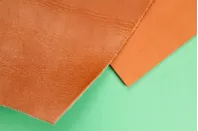
The journey starts with “beamhouse operations,” a series of steps to clean and prepare the hide. First, the hide is soaked to rehydrate it after preservation, then dehaired and degreased to remove impurities. This stage is critical: any leftover debris or fat can ruin the tanning process later. Next, the hide is limed to soften it and open up its fiber structure, making it receptive to tanning agents. Finally, it’s delimed and pickled (treated with acid) to adjust the pH level—setting the stage for the tanning itself.
1.2 The Tanning Core: Infusing Durability
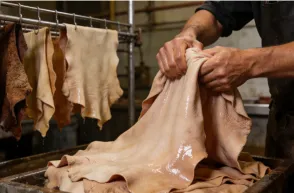
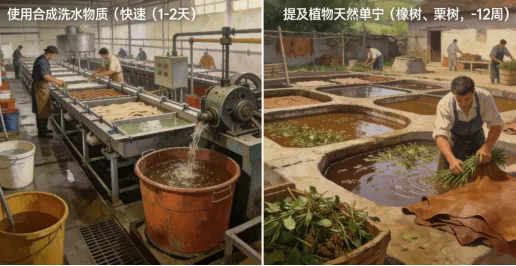
This is where the leather tanning process takes its defining form, as tanning agents bond with the hide’s collagen fibers. The two most common methods are chrome tanning and vegetable tanning. Chrome tanning uses synthetic chemicals (like chromium salts) and takes just a day or two, making it cheap and efficient for mass-produced goods. Vegetable tanning, by contrast, relies on natural tannins from plants—think oak, chestnut, and quebracho—and can take 4 to 12 weeks. It’s this patience that gives the leather its unique character.
2. Why Vegetable Tanning Stands Out for Premium Leather Bags
For brands committed to quality, vegetable tanning isn’t just a choice—it’s a philosophy. Unlike chrome-tanned leather, which often feels stiff or artificial, vegetable-tanned leather develops a beautiful patina over time, deepening in color as it interacts with sunlight, oils, and the owner’s touch. This evolution is part of what makes premium leather bags so personal. But there’s more to it than aesthetics; vegetable tanning aligns with sustainability and craftsmanship, two pillars of luxury.
2.1 Sustainability: Kind to the Planet and Artisans
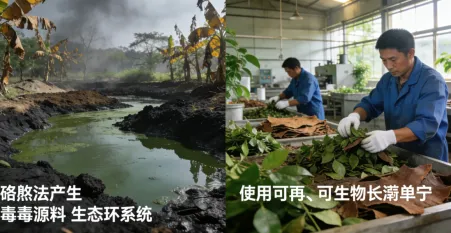
Chrome tanning generates toxic waste that can harm ecosystems if not properly treated—a major concern for eco-conscious consumers. Vegetable tanning, however, uses renewable, biodegradable tannins. The process is also less harsh on workers, who avoid exposure to harmful chemicals. For those who value the story behind their accessories, knowing their bag was made with earth-friendly methods adds another layer of meaning to its ownership.
2.2 Superior Quality: Perfect for Luxury Craftsmanship
Vegetable-tanned leather is denser and more durable than its chrome-tanned counterpart, able to withstand years of use without losing its shape. This durability is crucial when considering how are leather bags made: premium designs are meant to last, not just trend. The leather’s natural texture also accepts hand-stitching and detailing better, allowing artisans to create intricate designs that showcase their skill. Every scratch or mark becomes a part of the bag’s history, turning it from an accessory into a heirloom.
3. From Tanned Leather to Finished Product: How Are Leather Bags Made
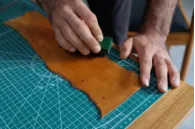
Once the vegetable-tanned leather is ready, it moves to the workshop, where artisans transform it into the premium bags we know and love. This stage is where attention to detail makes all the difference, from cutting the leather to the final touches like leather bag edge finishing.
3.1 Cutting and Stitching: Precision in Every Step
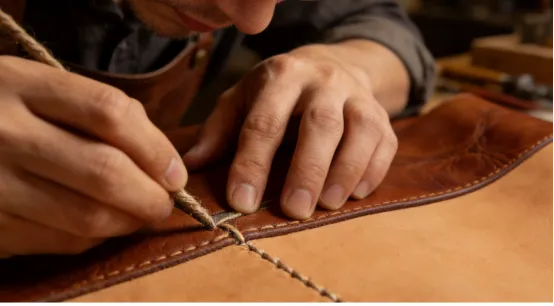
Artisans start by cutting the leather according to patterns, ensuring that the grain (the natural lines of the hide) aligns for both aesthetics and strength. Each piece is carefully inspected for flaws—only the best sections make it into the final product. Next comes stitching, often done by hand with heavy-duty thread. Hand-stitching is stronger than machine stitching and allows for tighter, more precise seams, a hallmark of luxury. The leather’s natural suppleness makes it easy to manipulate into the bag’s shape, whether it’s a structured tote or a soft satchel.
3.2 The Finishing Touch: Leather Bag Edge Finishing
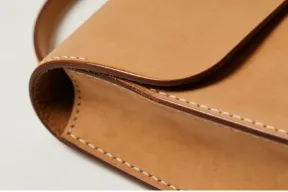
One detail that separates premium bags from mass-produced ones is leather bag edge finishing. After stitching, the edges of the leather are sanded, burnished, and treated with natural oils or waxes. This process smooths rough edges, prevents fraying, and gives the bag a polished, cohesive look. For vegetable-tanned leather, edge finishing also enhances the material’s natural beauty— the oils seep into the leather, deepening its color and adding a subtle sheen. It’s a time-consuming step, but one that reflects the artisan’s commitment to perfection.
4. Embracing the Legacy of Vegetable Tanning
In a world of fast fashion, where products are made to be replaced, premium leather bags stand out as a testament to slow craftsmanship. The leather tanning process—especially when done with vegetable tannins—isn’t just about creating a material; it’s about honoring tradition, respecting the planet, and crafting something that will last. Every step, from the tanning vat to the edge finishing, is a labor of love, and that love shines through in the final product. When you invest in a vegetable-tanned leather bag, you’re not just buying an accessory—you’re buying a piece of craftsmanship that will grow with you, telling your story for years to come.